🇫🇷
Cross-border from France: tax, commute, pitfalls
131,000 French residents commute daily. Tax at source, 34 remote days, a saturated A31: the full manual.
Where does your tax go?
Under the tax treaty, a Luxembourg salary is taxed in Luxembourg, at source. France counts it for the effective rate on your other income but doesn't re-tax it. Social contributions go to Luxembourg (CCSS); the CNS covers your healthcare on both sides of the border, and Luxembourg family allowances generally apply.
The 34 remote-work days
Beyond 34 days worked remotely from France per year, the corresponding share of salary becomes taxable in France — and beyond 25% of working time, your entire social-security affiliation can flip. Count your days, keep evidence, and check your employer's policy: many cap cross-border remote work precisely for this.
The real issue: the A31
Over 100,000 vehicles cross the border at Zoufftgen daily. A Thionville–Kirchberg advertised at 30 minutes often exceeds 60 in the morning. The workarounds, ranked: live within 10 minutes of a line-90 station (Thionville, Hettange-Grande), target a second-ring Luxembourg P+R (Frisange, Bettembourg), or negotiate shifted hours. The Thionville–Luxembourg train remains by far the best time-to-reliability ratio.
Where to live on the French side?
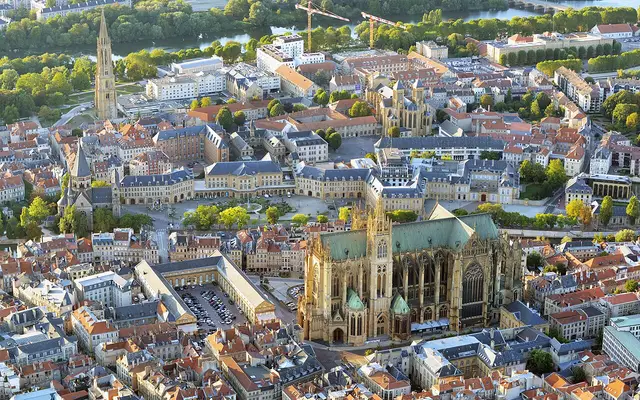
Thionville and Yutz for services, Hettange-Grande for rail, Audun-le-Tiche and Villerupt for working at Belval, the Longwy basin for tight budgets. Metz only makes sense if your life (partner, schools, culture) is already there: its daily commute is the hardest in the whole zone.